
What Can Your Soil Tell You
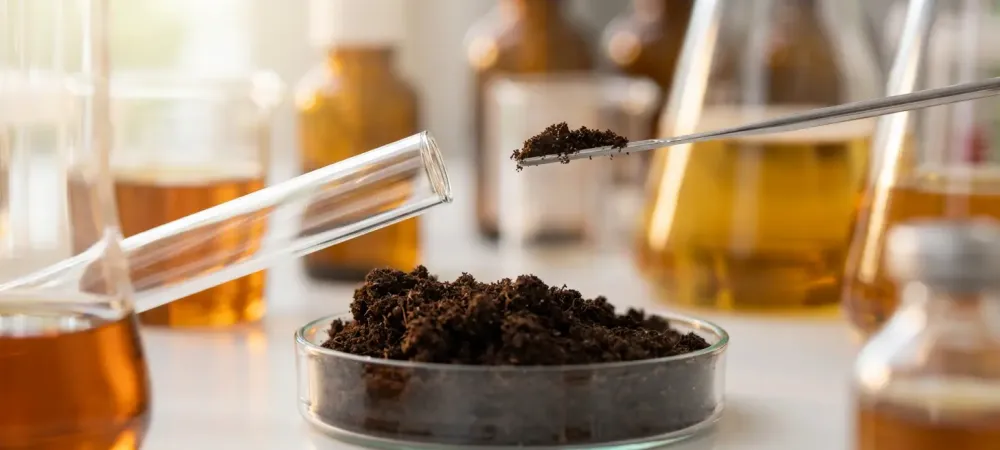
What a Soil Sample Can Tell You About Your Lawn
Hi, this is Skip with Father and Son Pest and Lawn Solutions. Today we're talking about soil samples: why you should take one, how to take one, and how to interpret the results.
Why Take a Soil Sample
We typically recommend a soil sample when grass isn't responding to treatments, especially fertilizer. Taking a sample tells us exactly which nutrients are lacking and what the soil pH is. This matters because pH that's too low or too high can prevent grass from absorbing the nutrients already in the soil.
If a lawn seems anemic, meaning it's not declining but also not really growing, if you're only mowing every two or three weeks, or if weeds seem to be outgrowing the grass, that's a good sign it may be worth pulling a soil sample to see what's going on.
Filling Out the Soil Sample Form
We use a company called Waters Agricultural Laboratories, though the University of Florida also offers soil testing, and most forms follow a similar layout.
On the form, you'll fill in your basic contact information so the lab knows where to send results. There's also a sample identification field, which is just for your own reference. If you're sampling more than one area, like a front yard and a backyard, this lets you keep the results separate and organized.
The form includes a "planned crop" field, since these forms are used across all types of agriculture. For a lawn, you'd just note the type of grass being tested, such as St. Augustine, centipede, or zoysia.
There are also several testing options. For turf grass, a basic routine sample is all that's needed. We also request testing for a couple of key micronutrients, zinc and manganese, along with the standard macronutrients, phosphorus and potassium.
How to Collect a Soil Sample
Collecting a sample is simple. Take about half a handful of soil from three or four different spots around the yard using a hand trowel, and place it all into a single bag.
It doesn't matter exactly where in the yard you dig, though areas with thinner grass are often easier to dig into. Only go down about two to three inches, since that's where the grass root zone is. Mix the soil from each spot together in the bag to get an average reading for the yard.
It's generally not necessary to test different areas of the lawn separately unless there's a major difference in conditions, such as one section being heavily shaded by trees and another being completely open. For most lawns, combining samples from a few spots around the property gives an accurate overall picture.
Reading the Results
Once the lab analyzes the sample, they'll send back a report. Here's what to look for.
The sample ID field will match whatever identification you provided, so you can tell which results belong to which area.
The main body of the report covers the two macronutrients, phosphorus and potassium, shown on a bar graph. In this sample, phosphorus is very low and potassium is barely in the medium range, neither reaching adequate levels. This is common in this region because of our sandy soil, which holds very few macronutrients naturally.
Nitrogen, the third major nutrient turf grass needs, won't appear on this report. Nitrogen is water-soluble and doesn't bind to soil, so it's either absorbed quickly by the grass or filters down past the root zone. Because it doesn't persist in the soil, it isn't part of a standard soil analysis.
The report also includes the micronutrients we requested. In this sample, magnesium, calcium, and zinc are all in a healthy range, and having them on the higher end isn't a problem. Manganese, however, came back very low, which is worth noting when selecting a fertilizer, since you'll want one that includes a meaningful amount of manganese.
Soil pH
Soil pH plays a big role in how well grass can access the nutrients in the soil. The target range for turf grass is typically between 6.5 and 7. In this sample, the pH came back at 6.2, which is close to that range but slightly low. The report recommends a light application of lime to bring it up.
If your soil pH comes back below 6.5, adding lime can help raise it.
Applying the Recommendations
The report also includes nutrient recommendations, given in pounds per thousand square feet. In this case, the recommendation was 18.4 pounds of lime per thousand square feet, which is a fairly modest amount. In yards with much lower pH, lime recommendations can run as high as 50 to 70 pounds per thousand square feet.
Along with the lime, the report recommended nitrogen at 4.6 pounds per thousand square feet, phosphorus at 1.8 pounds, potassium at 2.3 pounds, and manganese at about a quarter pound per thousand square feet, based on the earlier low reading.
When choosing a fertilizer, compare its nutrient formulation against these recommended rates and select a product that lines up as closely as possible. The rest of the report breaks down additional details for anyone who wants to go deeper into the soil chemistry, but for most lawns, the nutrient levels and pH are the main things to focus on.
That's how to take a soil sample and interpret the results.